

In the early hours of Sunday, May 3, Jordanian F-16 fighter jets crossed into Syrian airspace and launched strikes on at least six locations in the southern province of Sweida. In a statement issued hours later, Jordan’s military said that “Operation Jordanian Deterrence” had targeted “factories, facilities and warehouses used by trafficking groups as launch points for smuggling operations into Jordan.”
This was the fifth time Jordan had launched military strikes in Sweida since the fall of Bashar al-Assad’s regime in December 2024, and the third round since the area fell under the control of Israel-backed Druze militia groups, known as the “National Guard,” in July 2025. That dynamic — in which most of Sweida falls solidly outside the control of Syria’s transitional government — developed in the wake of a week of brutal hostilities and the death of as many as 1,700 people last July, as localized conflict between Druze militias and Bedouin tribal members triggered a government intervention and a flurry of vicious reprisals that then drew the intervention of Israel’s air force. A U.N. investigation into the fighting found government forces, Bedouin tribal members and Druze militias all implicated in war crimes, with the government most complicit.
Israel’s interest in Druze-majority Sweida is driven in part by its own domestic Druze dynamic. Israel’s Druze minority plays an influential role within the military, inculcating a strong domestic sentiment of solidarity for Druze brethren beyond the country’s borders. But more importantly, Israel’s government has embraced a hostile posture toward Syria’s new government since day one. In the first days after Assad’s fall, Israel conducted as many as 15 airdrops of weapons and ammunition to Druze militias opposed to Damascus. Since the fall of Assad’s regime, Israel has also occupied approximately 80 square miles of Syrian territory, launched nearly 1,100 air and artillery strikes on Syrian targets, and conducted over 1,000 ground incursions even deeper into Syria. In such an environment, the prospect of a Druze-controlled Sweida offers a valuable buffer, deterrent and threat to Damascus, and a constant source of political and sectarian tension that helps to achieve Prime Minister Benjamin Netanyahu’s objective: to keep Syria weak and divided.
Since the violence that struck Sweida in July 2025, as many as 40 Druze militias have united under a “National Guard,” whose loyalty is to one of the region’s three Druze religious leaders, Hikmat al-Hajari. With Israeli support and de facto protection, the National Guard and a political council loyal to al-Hajari have consolidated control of Sweida, and since then, drug trafficking from the region toward Jordan has surged by more than 325%, according to data collated by Syria Weekly. In numerical terms, Jordan intercepted 21 drug trafficking attempts from the area between January and July 2025, with 128 additional interceptions taking place between July 2025 and April 2026.
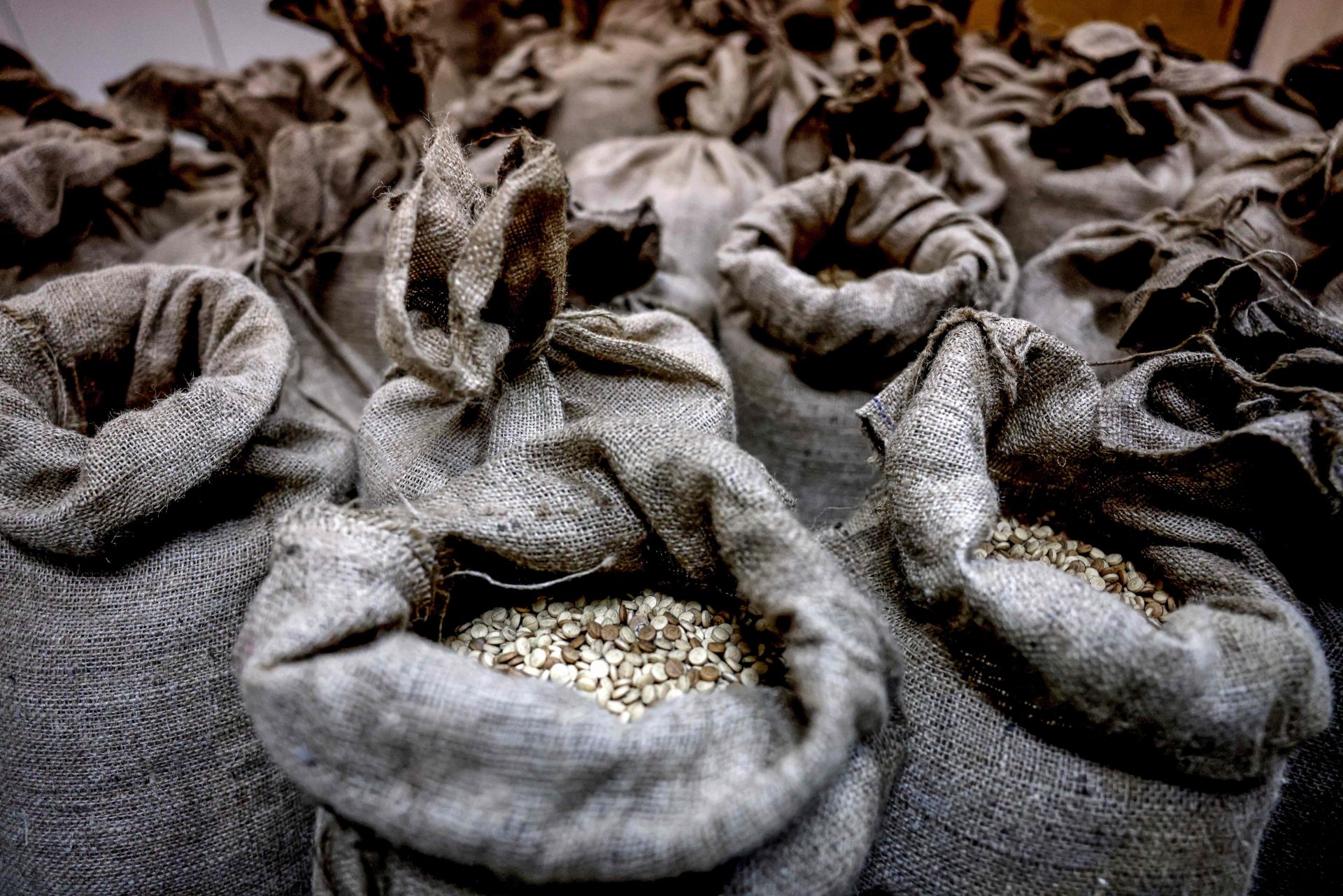
In concentrating all of its military response upon Sweida — both before and since Druze militias assumed formal control — Jordan’s military and intelligence apparatus has been consistently clear that the province is the epicenter of the threat. That threat exists primarily in the form of the drug Captagon, a cheap and highly addictive amphetamine, which smugglers initially attempted to transport using quadcopter drones. Those systems were both expensive and low-yield, however, so traffickers have since embraced a novel tactic: employing large, heavy-lift balloons filled with helium and equipped with GPS guidance systems as well as timed remote-release mechanisms designed to drop payloads of drugs once across the Jordanian border. Since July 2025, according to data I collected, the Jordanian military has intercepted at least 46 million Captagon pills, most of them loaded onto these balloons. Occasionally, balloons and quadcopter drones have also been used to ferry weapons, explosives and other drugs such as crystal meth and hashish.
Sweida has long been a corridor for the drugs trade in Syria, with Assad’s regime using the sparsely populated region and its deeply entrenched smuggling networks to traffic narcotics into Jordan en route to more moneyed customers in the Gulf. Assad’s then Military Intelligence Directorate and elements from the elite Iranian-backed 4th Division (led by Assad’s brother Maher) co-opted Sweida’s Bedouin tribes and Druze partners to coordinate the trafficking operation, with at least 12 large-scale Captagon production facilities established in Sweida.
Since Assad’s fall and the violence that struck Sweida in July 2025, some of those very same organized crime actors have returned to power and found a new local authority that has been at least tacitly accepting of their criminal and trafficking activities, if not fully supportive of them. At a January 2025 meeting with Druze militias that would go on to become the core of the National Guard, all chose to disregard my questions about the challenge of drug trafficking across Syria — a telling snub, in retrospect.
In fact, more than half of Sweida’s National Guard leadership are former senior officers of Assad’s regime, including Brig. Gen. Jihad al-Ghoutani and Maj. Talal Amer, both alumni of the Iranian partner force, the 4th Division, as well as figures like Brig. Gen. Shakib Nasr, the former intelligence chief in Tartus, and Brig. Gen. Anwar Radwan, the former security chief in Baniyas. Other senior National Guard leaders are organized crime figures previously tied to Assad’s Military Intelligence Directorate, including Nasser al-Saadi, Bassel al-Tawil, Haydar Arij, Mohannad Mazhar, Fawaz Abu Sarhan and internationally sanctioned Hezbollah partner Raji Falhout. Sarhan’s leading role in transnational drugs and weapons trafficking previously earned him an Interpol arrest warrant, while Mazhar is an infamous name associated not just with drugs trafficking, but with the kidnap-for-ransom trade, prostitution and assassinations.
These ties back to Assad’s regime and its notorious organized crime activity — which once earned it the title of the world’s biggest narco-state — explain why Syrian government raids and interceptions in recent months have revealed a connection to Lebanon, where remnants of Assad’s regime have found a safe haven alongside Hezbollah. For example, on Jan. 12, 2026, Syria’s specialist counternarcotics force intercepted a large shipment of drugs arriving from neighboring Lebanon, which contained not just 650,000 Captagon pills and some 230 pounds of hashish, but 226 brand-new, unwrapped heavy-lift balloons.
This marked the first time that the original source of these balloons had been revealed and served to underline the central role that Lebanon appears to play in the persistence of the drug trafficking challenge in Syria. In fact, in the past six months alone, Syrian authorities have seized nearly 33 million Captagon pills newly arrived from Lebanon. Strikingly, this accounts for 77% of all Captagon seizures by Syria’s government throughout the country over the same time frame, according to Syria Weekly data.
While Hezbollah’s role as a key driver of organized crime inside Syria is clear, the Lebanese government has begun cooperating with Damascus. For example, in March 2026, Syrian forces detained a leading Lebanese drug trafficker for deportation, acting on intelligence provided by Beirut. As the Syria-Lebanon bilateral relationship has gradually improved, so too has the rate of Syria’s interception of drugs coming from Lebanese soil. Whether this increase is a result of intelligence cooperation, enhanced Syrian capacity to detect and intercept smugglers, or an increase in smuggling itself is impossible to determine. But the numbers speak for themselves. Between January and October 2025, a total of 4,390,000 Captagon pills were seized in Syria after arriving from Lebanon, but from October 2025 to April 2026, Syrian authorities intercepted a total of 22,823,000 Captagon pills — a significant monthly increase.
According to Syria’s Interior Ministry, the domestic production of Captagon was virtually eradicated by the fall of 2025, following intensive raids on facilities previously run by Assad’s regime. Though as Interior Minister Anas Khattab told me at the time, there was little that government authorities could do about Sweida, where operatives linked to al-Hajari have established new Captagon production facilities since July 2025 — including one in downtown Sweida itself.
As the drug trafficking challenge has evolved and persisted, Syria’s government has formed close and effective counternarcotics security relationships with its neighbors. In the past six months alone, Syria’s Interior Ministry and General Intelligence Directorate have conducted joint operations against drug trafficking cells with Iraq, Turkey and Jordan, as well as Lebanon. The Interior Ministry’s dedicated counternarcotics forces have received training, equipment and capacity-building assistance from Qatar, Saudi Arabia and Jordan, according to a Syrian government source speaking on the condition of anonymity. Three hundred Syrian internal security personnel just graduated from Jordan’s International Police Training Center, for deployment to checkpoints along the Sweida front line.
Yet despite such progress, Sweida sits outside of Syrian government control and beyond the reach of its counternarcotics forces. The persistence of organized criminal activity there and its transnational nature is why Jordan was forced to take matters into its own hands. Moreover, Jordanian intelligence has assessed that al-Hajari has purposefully established a strategic relationship with drug traffickers and organized crime actors inside Sweida, creating a “permissive environment” for their activities and aligning himself with their security interests in exchange for a much-needed source of revenue. This is precisely the plan previously concocted by Assad’s regime, and Jordan knows well that such arrangements do not tend to reverse.
But Jordan did not act entirely alone. Two security officials in Damascus told me that Syrian intelligence contributed to Jordan’s strike package, channeled through a dedicated intelligence-sharing cell established earlier in 2025 specifically to tackle drug trafficking. Syrian authorities were also informed of the strikes before they occurred.
Jordan’s strikes on May 3 were revealing. Several of the properties that were hit in the town of Arman belong to Fares Saimouah, a figure who formerly had deep ties to Assad’s regime, organized crime and trafficking. According to local sources in Sweida, Saimouah is close to Mazhar, the National Guard commander, and his brother Atef — both of whom are also among the most public celebrants of their alliance with Israel. Saimouah is also thought to be the brains behind the helium-filled balloons, having established a de facto monopoly over the supply of helium cylinders in Sweida.
Intriguingly, local media in Sweida reported that Saimouah’s brother Tareq was caught transporting a large number of helium cylinders just days before Jordan’s recent strikes, and it was a call by Fares to National Guard leader al-Ghoutani that ensured his release. Jordanian strikes also hit National Guard facilities, including in the town of Shahba — the furthest north Jordan has ever hit and a short drive from al-Hajari’s headquarters compound in Qanawat. Other strikes hit Captagon production and pressing facilities, and storage depots further south, some tied to two other Druze organized crime figures — Adhab Azzam (in the town of Ariqa) and Yazan Breik (in the town of Majdal).
For its part, the Israel-backed Druze National Guard condemned Jordan’s actions, accusing Amman and Damascus of “settling political scores” and failing to coordinate with its forces in combating the “poison” that it claimed Damascus was responsible for.
Jordan’s investment in Syria’s Interior Ministry and concern regarding the Sweida file are well established. In fact, it was joint U.S.-Jordanian mediation that resulted in the September 2025 “Sweida Roadmap,” a document that saw Syria’s government admit culpability for the July 2025 killing and commit to withdrawing nongovernment fighters from the front lines; facilitating the entry of aid, the release of detainees and the return of displaced people; welcoming the U.N. Commission of Inquiry’s investigation of events in July 2025; and acceding to a path toward dialogue and an eventual reintegration of Sweida into the Syrian state. Though the roadmap was swiftly rejected by Israel’s ally al-Hajari, it remains the only internationally recognized agreement aimed at easing tensions and resolving the Sweida crisis.
Since the discussion of the Sweida Roadmap was concluded, Jordanian authorities have repeatedly attempted to foster a backchannel dialogue involving Syria’s government, Bedouin tribal notables and Druze representatives in Sweida, but Sweida’s de facto authorities have stood firmly in opposition. In fact, Jordan achieved a breakthrough in late November 2025, securing the agreement of at least a dozen Druze figures in Sweida to travel to Amman for a meeting. News of an imminent gathering was swiftly leaked to Arabic media, however, and on Nov. 29, National Guard militia members detained 10 suspected participants, including Druze clerics Raed al-Mutni, Assem Abu Fakhr and Maher Falhout — all three of whom were tortured to death and their bodies dumped outside Sweida’s National Hospital three days later. Such practices seem eerily similar to the days of Assad’s regime.
According to one Druze civil society source, at least 30 Druze figures inside Sweida have been abducted by the National Guard after being accused of communicating with Damascus, and they remain held in a network of detention facilities run by a widely feared actor known as “Eagle Eye.” Little reporting of the Eagle Eye security apparatus exists, but it is allegedly run by several National Guard commanders, including Shadi Abu Latif and Ghufran Murshid, and was established, with Israeli assistance and under al-Hajari’s authority, to be responsible for Sweida’s intelligence and surveillance apparatus — literally, the eyes and ears of the National Guard designed to spy on, detect, detain and disappear critics.
Beyond those who have fallen victim to the likes of Eagle Eye, other Druze figures who support the prospect of dialogue have smuggled themselves to Damascus. One was Hassan al-Atrash, the head of Syria’s most historically renowned Druze family, who gave a speech in Damascus in mid-February 2026 condemning al-Hajari and proclaiming that “a man is measured not by his ability to ignite fire, but to extinguish it.” Another was civil society activist and journalist Marhaf al-Shaer, whose brother Anwar, a poet, was shot dead by Druze militia members in December 2024, and who was himself abducted and shot in the knees by Mazhar, the National Guard commander, in January 2025.
Ultimately, challenges such as the drugs trade and Sweida’s role as an epicenter of organized criminal activity are exacerbated by the uncertainty and instability that have prevailed in southern Syria since the violence of July 2025. Since that ugly chapter, an increasingly unsustainable standoff has been in place between Syria’s government and Sweida’s de facto Israel-backed Druze authorities. Until now, Damascus has done little to palpably demonstrate any accountability for the crimes its forces committed, providing its opponents in Sweida with what they need to justify their actions. In many ways, this standoff suits al-Hajari well and is precisely what he sought from the beginning.
In fact, in an in-person meeting with al-Hajari in his Qanawat headquarters in January 2025, he told me that “there is no deal to be made with the terrorists in Damascus” and that “negotiations are not worth my time.” He added that he spoke daily with Mazloum Abdi, the leader of the Kurdish-led Syrian Democratic Forces (SDF) in northeastern Syria and that they were “coordinating their positions” vis-a-vis Damascus. Through the spring and early summer of 2025, al-Hajari repeatedly rejected compromise deals negotiated by Sweida’s military, political, religious and civil leaders with Damascus to secure a special status for Sweida within the new Syrian state.
Months later, in January 2026, the SDF suffered a swift military defeat at the hands of government forces, and then entered into what has been, so far, a surprisingly efficient and smooth process of integration into the state (on terms strikingly similar to those agreed broadly with Sweida earlier in 2025). This has left al-Hajari largely alone when it comes to domestic Syrian “partners,” causing him to harden his stance, not soften it.
Since signing up to the roadmap in September 2025, Damascus’ approach to this standoff has been largely to stand by and allow conditions inside Sweida to fester. While humanitarian aid and fuel continue to enter Sweida via the highway from Damascus, state services are crumbling and internal insecurity is worsening. In fact, in the past six weeks alone, rival groups of Druze National Guard militia members loyal to al-Hajari have engaged in at least 25 interfactional clashes with each other.
Beyond insecurity, Sweida and its people are unable to directly benefit from the gradual recovery of Syria’s economy and the surge of international engagement and early investments. Amid the ongoing standoff, Druze authorities are violently blocking their own public-sector institutions from interacting with their respective ministries in Damascus, causing serious challenges in education, health, banking and finance, civil registry and core water and electricity services. Meanwhile, the Israel-backed National Guard is accused by locals of exploiting its power in order to control the local economy for criminal enrichment.
For example, in April, Druze militia members stormed Sweida’s Education Directorate and kidnapped its director, Druze academic Safwan Balan. Hours later, Balan issued a statement on Facebook stepping down from his role “in compliance with the decision of Hikmat al-Hajari.” There followed a teachers’ strike and multiple meetings with al-Hajari, in which educators warned that a vacuum of leadership would mean the upcoming examination season would be missed. Al-Hajari refused to budge, warning that any teacher who failed to turn up to work would be arrested.
Balan subsequently quietly returned to work, and negotiations with Damascus began over how to proceed with impending primary and secondary examinations. Al-Hajari first rejected a government proposal for Ministry of Education officials to enter Sweida to monitor exams, only later to suggest he would allow only female non-Sunni Muslim education officials to enter — a suggestion rebuffed by Damascus. Then Damascus proposed that the Syrian Arab Red Crescent could accompany ministry staff, but that too was rejected by al-Hajari. Balan promptly resigned. As Syria’s examination season began, the ministry issued a decision stipulating that Sweida’s students would need to travel to Damascus or its countryside to sit their exams, prompting threats by the National Guard and a raid on Sweida’s Education Directorate.
Similar episodes have occurred in recent weeks over mayoral appointments, control of the governorate’s Civil Affairs Directorate, the transport of university students to Damascus and more. In such a climate, just 6% of Sweida residents are content with their current situation, according to polling.
This zero-sum approach is unsustainable. For the sake of Sweida’s population and for Syria writ large, a compromise must be found between Sweida and the government in Damascus. The U.S. government is well positioned to convene and mediate dialogue and negotiations between the two parties, but for it to do so, Israel would also need to de-escalate its open hostility to Syria and convey to Sweida that dialogue is the only path forward. Unless and until that happens, Sweida will continue to fall behind Syria’s wider recovery and path of stabilization; insecurity, drug trafficking and organized crime will persist; and a potential solution will become increasingly hard to reach.
Become a member today to receive access to all our paywalled essays and the best of New Lines delivered to your inbox through our newsletters.